
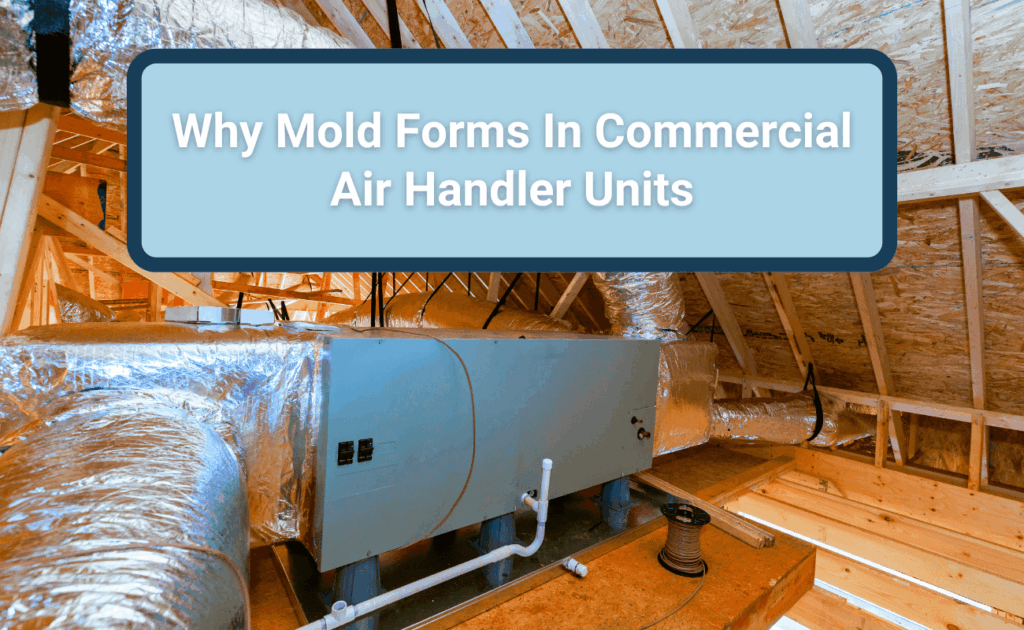
Mold growth within air handler units is a common problem that people don’t always notice in commercial HVAC systems. This can quickly become a much bigger problem than it seems for facility managers, property managers, and maintenance directors. Mold that grows in your air handler doesn’t stay in one place. Your HVAC system moves air around your whole building, which means that mold spores can get into offices, patient areas, production floors, and other places. The first step in stopping mold from growing in air handler units is to learn why it does.
Why Does Mold Tend To Grow In Air Handler Units?
Air handler units make the perfect conditions for mold to grow. When warm air passes over the cooling coil, it pulls moisture out of the air and collects it on the coil and other parts around it. This condensation then drips into the drain pan, but not all of the water is removed right away.
The first part of the ductwork after the air handler, as well as the coils, insulation, and internal surfaces, can stay wet for a long time. When you add this moisture to the dust, debris, and organic matter that are already there in commercial settings, you get the perfect conditions for mold to grow.
As time goes on, this buildup can cause mold to grow on coils, inside the unit housing, and even in the ductwork that connects to the unit. The first 10-20 feet of the ductwork from the air handler get lots of exposure to the moisture, creating an even more widespread issue.
Signs Of Mold Growth In Your Air Handler Unit
It’s not always easy to see mold in an air handler unit right away, but there are some signs that facility managers should look for:
- Vents that smell musty or damp
- More moisture or humidity around HVAC equipment
- Visible buildup on the coils or inside the access panels.
- Occupant complaints about breathing problems.
- Less air flow or system performance
If you see these signs, there’s a good chance that mold has already started growing within your system.
How To Keep Mold Out Of Your HVAC System
The best way to prevent mold growth in your commercial HVAC system is to invest in regular preventative maintenance. If you don’t have your system inspected and cleaned regularly, moisture and dirt will keep building up, which is exactly what mold needs to grow.
Regular services that help keep mold from growing include:
- Air handler unit restoration
- Drainpan restoration and maintenance
- Professional mold remediation
- Duct cleaning and sealing to keep mold growths from spreading
- Air quality testing to catch mold issues earlier
HVAC systems must be continuously running in top shape all the time for businesses and orgnaizations in healthcare, manufacturing, education, and commercial offices. Preventive maintenance keeps your system clean, running well, and safe from contamination.
Why Mold In Air Handlers Is A Serious Problem
Mold in an air handler unit is more than just a maintenance problem; it’s an air quality issue that can affect everyone in your building. Mold spores can spread throughout the space as air moves around, which could lead to breathing problems, discomfort, and other health issues for occupants.
If you don’t get rid of mold, it can keep growing, damage your HVAC system, and cost you more money to fix or take your system offline. That’s why it’s important to deal with the problem early by doing the right inspections, tests, and repairs. If you think your air handler unit has mold, you should act quickly. PROAC offers services like air handler restoration, air quality testing, and mold removal to help keep your building running safely and efficiently.
Contact PROAC To Handle Mold In Air Handler Units
PROAC is the reliable proactive building maintenance company here to keep your facility in top shape. We know the importance of taking care of mold in any part of your building’s HVAC system, and preventative maintenance services are the best way to keep your system in top shape, catching any potential issues before they turn into a major shutdown.
To keep your building’s HVAC running smoothly and prevent mold in your air handler unit, contact PROAC Corp today.